Quick Answer
If rain is likely, the planner and venue follow a pre-agreed decision process rather than improvising in front of guests. The ceremony may pause, shift time, move under cover, or use the backup layout. A complete rain plan protects people, sound, power, flowers and access - while keeping the celebration visually considered.
What happens first when rain is forecast?
The first step is not moving the wedding immediately. Mira, the venue and the relevant production vendors review the latest local forecast, radar or warning information, the condition of the site, and the time needed to relocate safely. A forecast is one input; the venue conditions and setup deadline matter too.
The decision process should already be written into the event plan. Couples need to know who has authority to make the call, the latest responsible decision time, and which layout will be used. That removes last-minute debate while crews need to work.
What should a Bali wedding weather decision timeline include?
Build the timeline backward from the last safe moment each team can relocate, test and finish the covered setup. The checkpoints below are not universal cut-offs; the venue and vendors must set the actual deadlines for the event.
- Planning stage: approve the preferred and covered layouts, access routes and additional costs before signing.
- Final vendor meeting: record the decision-maker, information sources, relocation duration and guest communication method.
- Wedding week: review the current BMKG outlook and confirm that both layouts, equipment cover and staffing remain available.
- Wedding day, before setup: inspect the site and review official forecasts or warnings with the venue and production leads.
- Agreed decision deadline: choose the approved layout early enough for every team to move and test safely.
- After activation: brief guests and vendors once, then operate the covered plan.
Will the ceremony be delayed or moved?
That depends on the intensity and duration of the rain, guest comfort, site drainage, lightning or wind risk, and the schedule that follows. A short, light shower may allow a carefully managed delay. Persistent rain or an unsafe exposed site usually makes the covered plan more responsible.
- Hold briefly: suitable only when the delay will not compromise safety, catering, transport or the reception timeline.
- Move under cover: use the pre-designed alternate ceremony layout.
- Reverse the order: occasionally a welcome or cocktail element can happen first, but only when vendors and the venue have agreed.
- Relocate the full event: use the confirmed indoor or tented space when conditions are unlikely to improve.
What makes a rain backup genuinely usable?
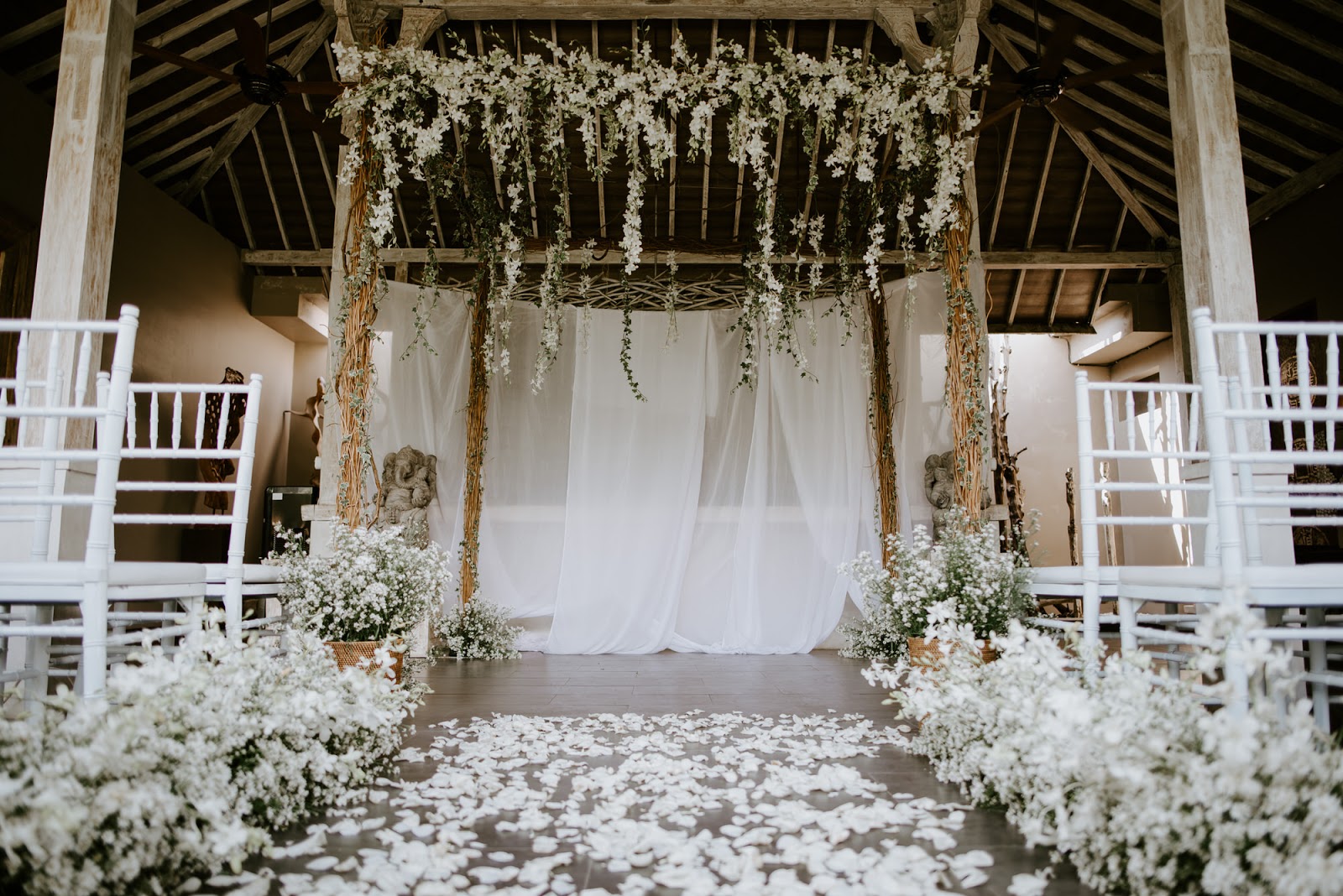
A room is not a backup simply because it has a roof. It must fit the ceremony or reception guest count, allow clear sightlines, provide safe power and sound positions, and have a workable path for guests and staff. The styling plan should identify which flowers, chairs, aisle elements and lighting move into it.
Ask to see the backup at the same stage of your venue search as the outdoor lawn. If you would feel disappointed holding the wedding there, solve that before signing or select a venue with a stronger alternative.
- Confirmed capacity and floor plan.
- Covered access from guest arrival and preparation areas.
- Safe power, sound and lighting positions.
- A defined floral and decor adaptation.
- Dry storage for personal items and equipment.
- Enough crew time to complete the change.
What does each vendor need to protect?
Rain planning extends beyond guest chairs. Sound desks, cables, lighting fixtures, instruments, stationery, cakes, fabric and floral mechanics may all need cover or a different installation method. Vendors should state what they can safely operate outdoors and how long relocation takes.
Catering also needs an uninterrupted service route. A beautiful indoor plan can still fail operationally if trays, glassware and staff must cross an exposed lawn in heavy rain.
Who is responsible for each part of the rain plan?
The event plan should assign an owner to every weather-sensitive decision. Exact responsibilities depend on the contracts, so record them rather than assuming the planner, venue or supplier covers everything.
- Planner or coordinator: maintain the decision process, shared timeline, contact chain and approved layouts.
- Venue: confirm usable covered spaces, access, drainage restrictions, house rules and the authorised venue decision-maker.
- Production team: define safe operating conditions for power, sound, lighting, staging and temporary structures.
- Decoration and rental teams: identify what can move, what needs protection and the labour or time required.
- Catering: preserve covered preparation, service and waste routes as well as safe food handling.
- Photography and video: agree covered portrait options and equipment-safe locations.
- Couple: approve the covered experience, delegated decision authority and known additional costs before wedding day.
How should power, sound and wedding details be protected?
Weather protection must be specified by the qualified vendor responsible for each system. Do not treat domestic umbrellas, loose plastic sheets or an improvised cable route as an event-safety plan. If conditions exceed the supplier’s safe operating limits, equipment should not remain in use merely to preserve the outdoor schedule.
- Keep electrical distribution, connections and control positions in approved protected locations.
- Confirm dry cable routes that do not create trip hazards or cross guest drainage paths.
- Provide protected holding space for instruments, stationery, cake, linens and personal items.
- Identify floral structures, candles, signs and lightweight objects affected by both rain and wind.
- Retest sound, lighting and power after any relocation before guests enter the space.
- Keep catering preparation and service routes covered from kitchen to dining area.
When is the final weather decision made?
There is no responsible universal time. The deadline is calculated backward from the labour and access required to move the setup. A small ceremony may change faster than a reception with staging, lighting, dining tables and extensive florals.
BMKG publishes forecasts and climate information for Bali, but a forecast should not be treated as a promise for one venue at one minute. Current official updates, local observation and the agreed operational deadline should be considered together.
Which rain-plan costs should be confirmed in advance?
Ask suppliers to separate included contingency work from optional or conditional costs. A backup is only usable when the space, labour and infrastructure are both reserved and affordable.
- Covered-room hire, venue extension or space conversion fee.
- Tent engineering, permits or venue approval, installation days, flooring and drainage measures.
- Additional labour to move furniture, flowers, sound, lighting and staging.
- Backup power, cable protection and extra technical testing.
- Covered walkways, umbrellas, towels, mats or guest transport adjustments.
- Replacement or adaptation of decor that cannot move safely.
- Supplier overtime, storage, standby time and late dismantling.
Can a wet-weather wedding still look intentional?
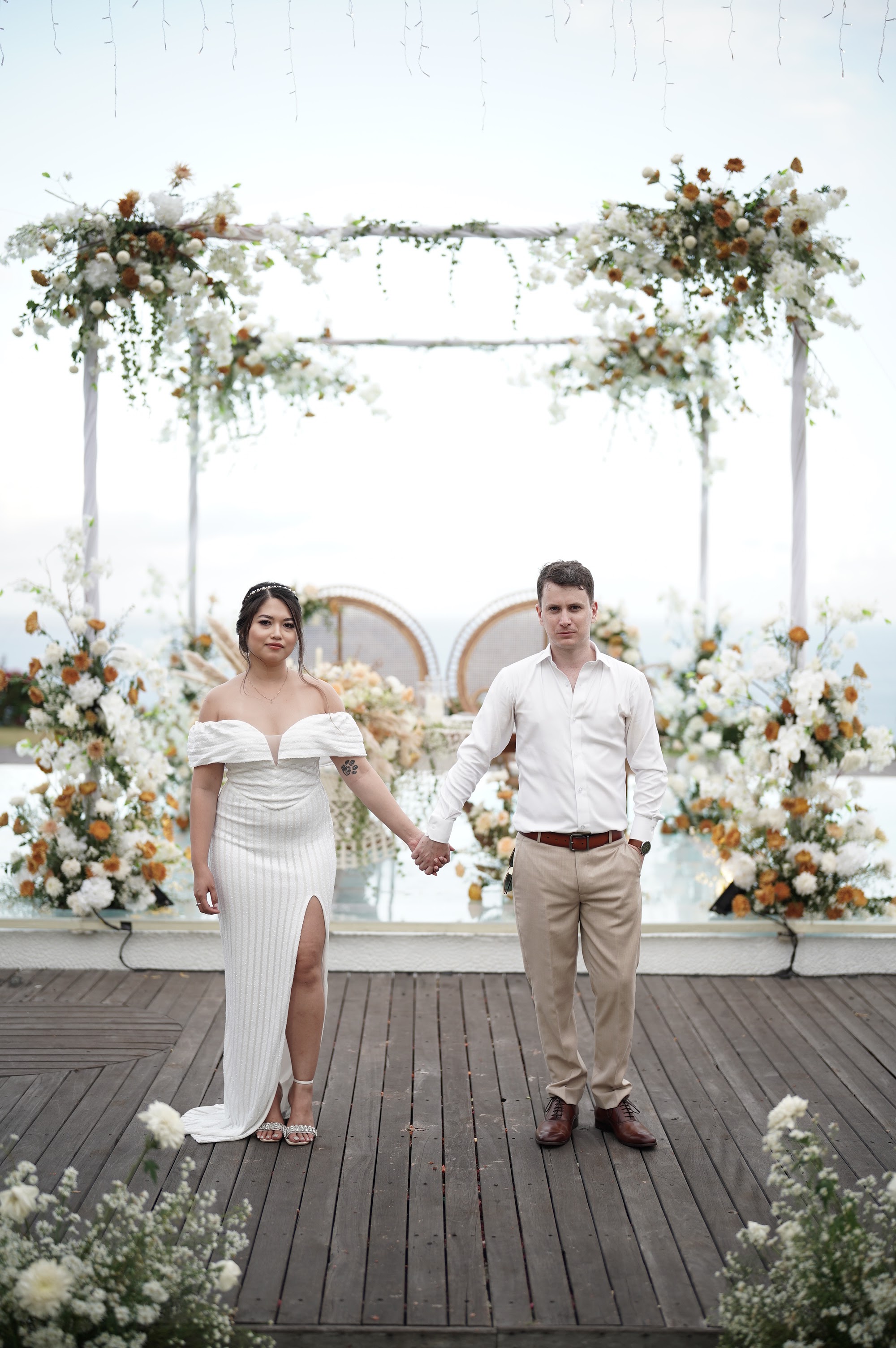
Yes - when the backup is designed, not merely reserved. Repeat the main colour palette, concentrate flowers where guests will see them, add warm lighting, and preserve a clear processional route. It is often better to create one strong focal point than scatter decorations across a smaller room.
At Mira Mi, the practical plan and the visual plan are developed together. The goal is not to imitate the outdoor layout exactly; it is to keep the feeling of the wedding while respecting the new space.
What should the couple confirm before wedding week?
Ask for the written rain plan before the final vendor meeting. The couple should understand the decision-maker and the guest experience, while the planner manages the operational detail.
- The exact covered space and both floor plans.
- The weather decision deadline and responsible person.
- Any tent, flooring, generator or additional rental cost.
- How guests will be notified or guided.
- Which decor elements move and which cannot.
- Transport changes if vehicle access becomes difficult.
- A plan for portraits if outdoor locations are unavailable.
Frequently Asked Questions
Questions couples ask.
Can it rain during Bali’s dry season?
Yes. A seasonal pattern changes the likelihood of rain but cannot guarantee a dry wedding day. Every outdoor event needs a workable covered alternative.
Who decides whether to move the wedding indoors?
The authority should be agreed in advance. It is usually a coordinated decision led by the planner with the venue and relevant safety or production input.
Can we wait until the ceremony starts to decide?
Usually that is too late. Crews need enough time to move chairs, sound, flowers and lighting safely, so the deadline must be based on the actual setup.
Should we rent a tent for a Bali wedding?
Only when the venue, ground conditions, capacity, installation window and budget make it a suitable solution. A tent is infrastructure, not an automatic fix.
Will rain ruin our wedding photos?
Not necessarily. A photographer can plan covered portrait locations and use softer conditions creatively, but equipment safety and realistic timing still come first.
About the author
Mira
Founder of Mira Mi Bali Wedding. Working across Bali weddings since 2013 and intentionally taking a maximum of fifteen celebrations each year.
Meet Mira →