
Quick answer
Start decoration planning from the confirmed venue, guest count and event layout. Study the natural background, light at the event time, wind and rain exposure, access for the installation team, and the venue’s rules. Then choose one design direction and carry it through the ceremony, tables, lighting, signage and guest touchpoints. A credible decoration quote separates materials, rentals, labour, transport, setup, changeover and dismantling.
1. Start with the venue, not the moodboard
A design that looks beautiful in isolation can fight a venue’s architecture or disappear against its landscape. Begin with a site walk-through or current video that shows the ceremony sightline, dinner area, guest route, service access and the quality of light at the event time.
- What is already strong: ocean, garden, architecture, view, shade or texture?
- What needs correction: a blank wall, uneven ground, harsh light, service area or unclear entrance?
- Where can structures be fixed safely, and what does the venue prohibit?
- How will the decoration read in the covered plan?
- What can guests touch, walk around or accidentally block?
Use the venue inspection checklist → · Check villa-specific constraints →
2. Write one design brief the whole team can use
Choose a concise direction rather than a long list of disconnected references. A useful brief states the feeling, palette, material language, floral attitude, light level and the elements that matter most to the couple.
- Setting: clifftop, garden, villa, beach, resort or another environment.
- Atmosphere: calm, intimate, graphic, tropical, textural or another precise description.
- Palette: two or three core tones plus a restrained accent.
- Materials: linen, timber, stone, woven fibre, glass, metal or another considered family.
- Florals: shape, movement, scent sensitivity and whether local seasonal substitutions are acceptable.
- Guest experience: what they see on arrival, during vows, at dinner and after dark.
A design brief should allow a professional team to make a sensible substitution when a flower, rental or structure is unavailable. It should not depend on one copied reference image.
3. Prioritise decoration by what guests actually experience
Divide the design into decisions that change the atmosphere and decisions that merely add volume. The right priority depends on the venue, but the following sequence is a useful starting point.
- Arrival: a clear entrance, welcome point and wayfinding.
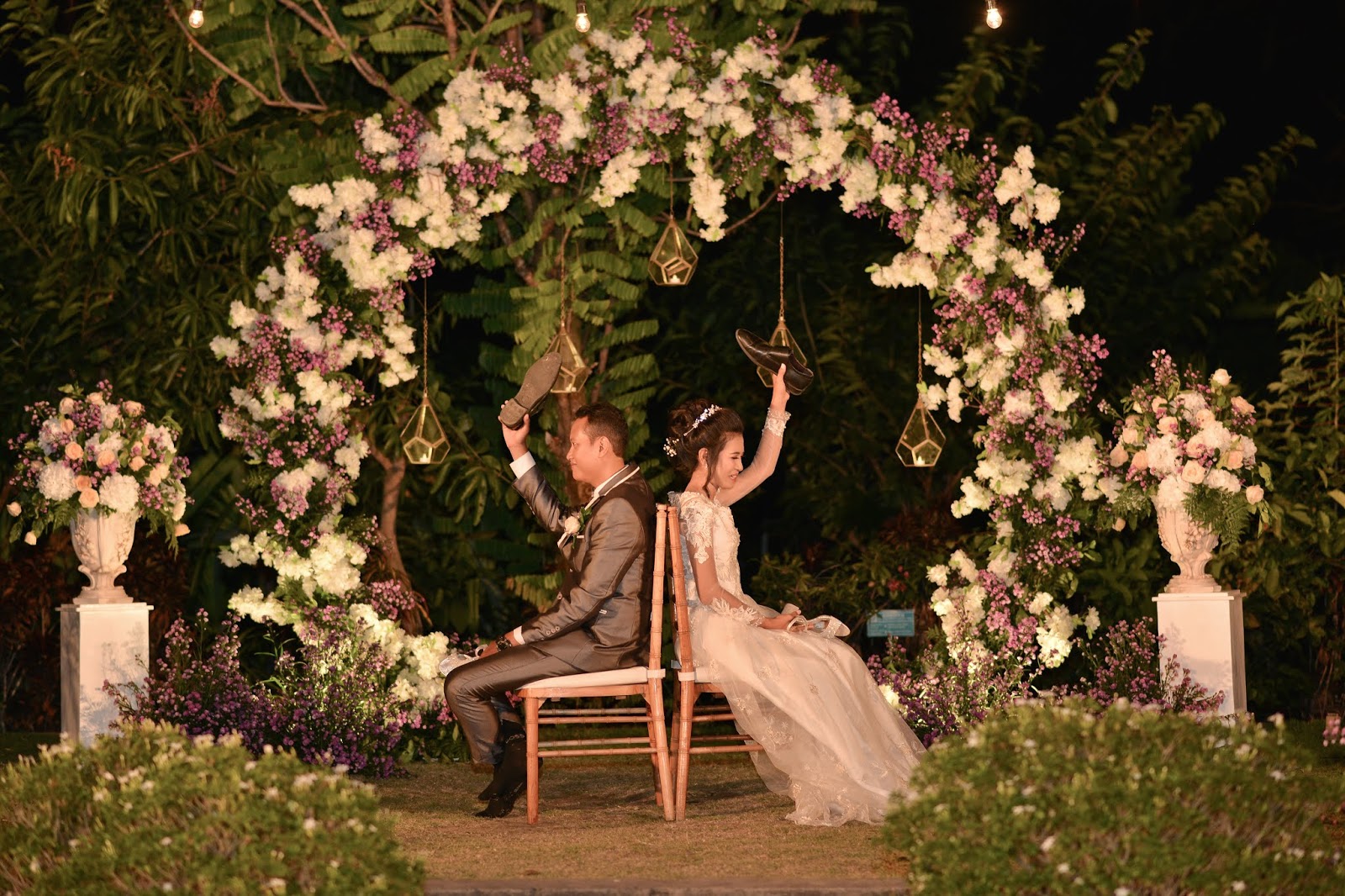
- Ceremony: the focal point, aisle rhythm, seating and a clean sightline.
- Table: scale, guest comfort, place settings, menus and the relationship between florals and conversation.
- Light: practical visibility first, then warmth, depth and evening focus.
- Transitions: how ceremony pieces are reused or changed for dinner without leaving a half-finished space.
- Small details: signage and personal touches that have a job, not objects added only to fill photographs.
Existing landscape often does more work than extra decoration. The goal is to frame the place and the people, not cover every surface.
See a floral ceremony direction → · See a beachfront setting →
4. Check production before approving the look
Decoration is physical work. Ask the designer or planner to test the concept against the actual installation conditions before it becomes a promise.
- Structure dimensions, safe fixing, wind exposure and ground conditions.
- Vehicle access, loading route, storage, parking and the number of installation crew.
- Setup, sound check, ceremony-to-dinner changeover and dismantling windows.
- Power supply, cable protection, lighting control and generator requirements.
- Heat, rain and humidity protection for flowers, fabrics, paper goods and electrical equipment.
- Venue approval for candles, hanging elements, confetti, flame, stakes, adhesives and floral disposal.
Ask for a plan that names who supplies, transports, installs, moves and removes every major element. “Included decoration” is not a production specification.
5. Read a decoration quote as a production document
There is no single honest online price for Bali wedding decoration. The scope changes with guest count, venue, material choice, structure, flower season, access, lighting and installation time. Compare quotes only when the brief and inclusions match.
Ask the quote to separate:
- Design and concept development.
- Fresh or dried flowers, foliage and substitutions.
- Structures, furniture, linens, tableware, signage and rentals.
- Lighting, sound-related decor and temporary power where applicable.
- Transport, crew, setup, changeover, dismantling and waste handling.
- Taxes, service charges, overtime, damage deposit and cancellation terms.
Keep a line for “assumption or unresolved”. A low total with missing access, weather or dismantling information is not comparable to a complete quote.
Use the wider cost framework → · Ask Mira about planning and decoration →
6. Protect the design in the wet-weather plan
Rain planning should preserve the guest experience, not merely move furniture under a roof. Design the covered option at the same time as the preferred option and identify what changes.
- Which focal point remains visible in the covered layout?
- Where do flowers, signage, tables and technical equipment move?
- What needs additional flooring, anchoring, drainage or power protection?
- How does the guest route change, including footwear and accessibility?
- Which pieces can be reused, reduced or removed without making the room feel unfinished?
- Who makes the decision and by what deadline?
Read the complete rain-plan guide → · Check BMKG Bali forecast ↗
What thoughtful Bali styling looks like
For Mira Mi, decoration is planned and built around the couple, venue and guest experience. That can mean one strong floral gesture, a restrained tablescape, careful candlelight or a structure that makes the ceremony feel intentional. It does not require covering a beautiful landscape or importing a look that belongs somewhere else.
Use the portfolio to study how different spaces carry different decisions, then bring a specific venue, guest range and priority to the conversation.
Sources and editorial limits
This guide was reviewed on 6 September 2026. It does not publish a generic decoration price because a credible scope depends on the venue and production brief. Weather planning should use the current BMKG Bali forecast alongside the venue’s own conditions. Quotes, venue rules and flower availability must be confirmed with the relevant supplier.
Frequently asked questions
Questions couples ask.
What should a Bali wedding decoration brief include?
Include the venue, guest range, ceremony and dinner layouts, preferred colours and materials, lighting conditions, floral priorities, rain alternative, setup window and budget boundary.
Should we choose flowers before the venue?
Usually no. The venue’s light, existing landscape, access, wind, rain exposure and installation rules should shape the decoration direction.
How can we control decoration costs without making the design generic?
Prioritise the guest-facing moments, reuse structures where practical, choose materials that suit the venue, and separate design decisions from production, transport and installation labour in the quote.